
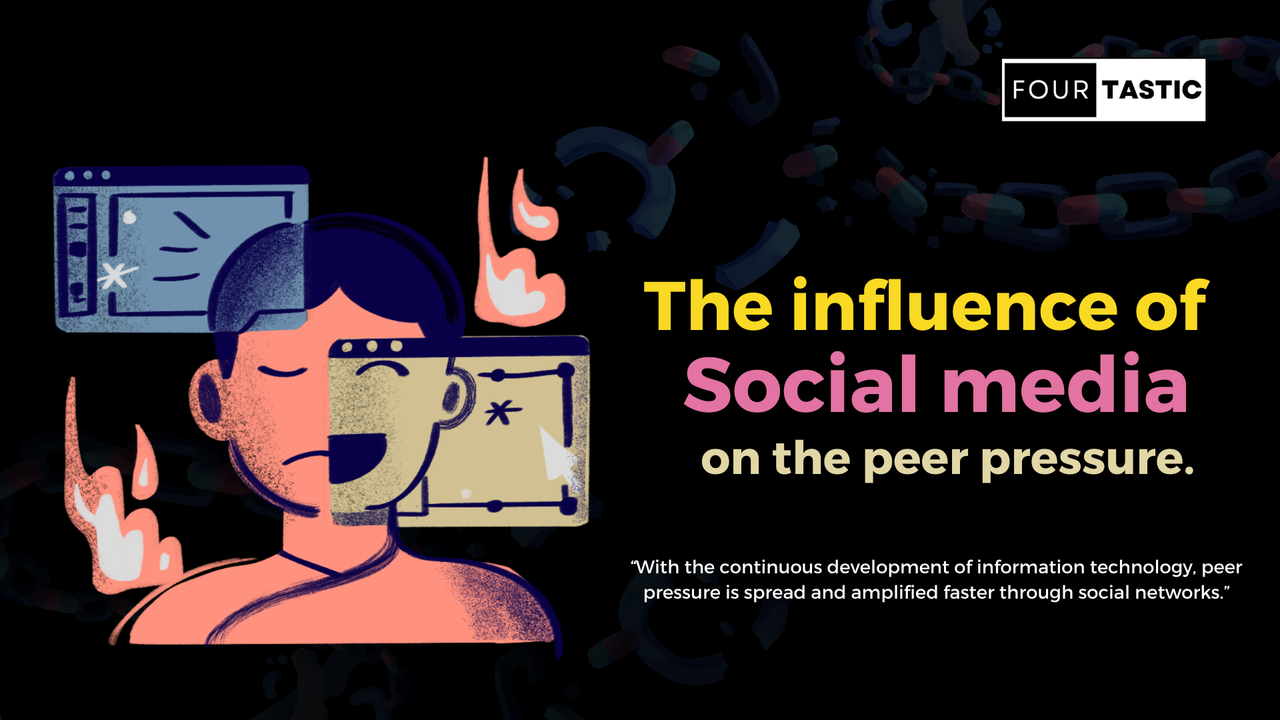
THE INFLUENCE OF SOCIAL MEDIA ON PEER PRESSURE
On a beautiful morning, you wake up and log in to the social platform, surf the news feed to get the latest information. Then you see an article about someone who has successfully started at the age of 18, or one of your classmates has updated a new status about her scholarship. You suddenly feel frustrated cause of being left behind.
With the continuous development of information technology, peer pressure is spread and amplified faster through social networks. We can easily be "suffocated" by the huge amount of information, and articles about success and achievements from people the same age or even younger than us, making us feel small and inferior.
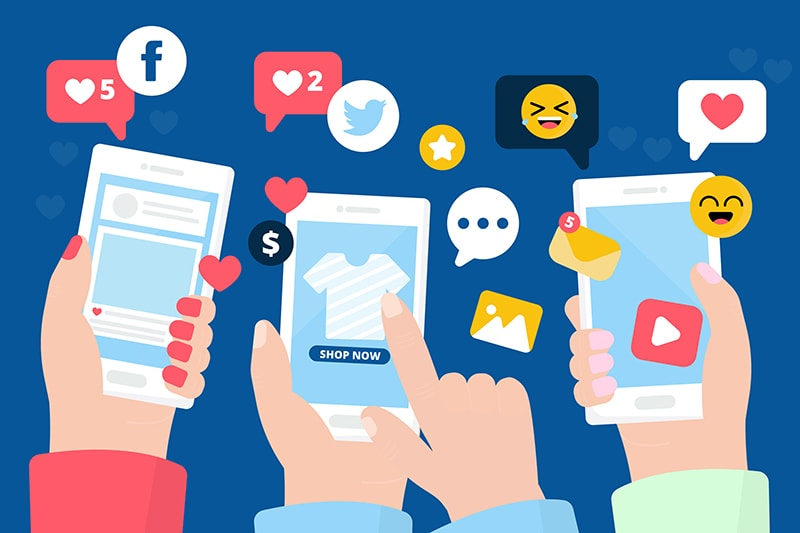
Online peer pressure
In the era of innovative technology, social networks appear as an indispensable part of life. However, it is a double-edged sword, connecting people but also containing a sinister side – online peer pressure.
Anyone who uses social media apps will once feel a certain amount of pressure to conform to the ways others look and act, to have the things they see others having, and to behave in similar ways. Things we have seen on these platforms have become a prominent source of influence, particularly shaping appearance standards, behaviors, and material possessions. This influence is especially impactful on children and teenagers, who are in the crucial stage of identity formation and seek acceptance from their peers.
During adolescence, children can easily be influenced by their same-age peers. This happens because they are trying to fit in with their peers and seek independence from the adults in their lives. Young individuals may not yet reach the level of maturity to critically evaluate and navigate these influences, making them more likely to change themselves in order to meet these standards. If children can not keep up with these, they can feel stressed and depressed at themselves, thinking everyone can do this except them. Consequently, the images and content they see on social media platforms can have a powerful influence on their attitude, behavior, and self-perception.
Fear Of Missing Out - FOMO
Popular trends, challenges, and activities promoted through social media can create a pervasive sense of FOMO (Fear of Missing Out). Young individuals may feel pressured to participate in these trends to avoid feeling left out or socially isolated. Some of these trends can be risky, dangerous, or even harmful, leading to physical or emotional harm. Moreover, a desirable and perfect lifestyle is often showcased on social media platforms based on material possessions, luxury experiences, and the pursuit of wealth. They may feel compelled to chase after these symbols of success, leading to financial strain, feelings of inadequacy, and a distorted sense of self-worth.

Cyberbullying
Moreover, social media platforms can facilitate cyberbullying, fueled by the anonymity and distance provided by screens, which has added to the negative impact of online peer pressure. Peers within online communities may engage in harassment, public shaming, or exclusionary tactics to enforce certain behaviors, ideologies, or social norms. Victims of cyberbullying may feel immense pressure to conform or face severe consequences, leading to increased rates of depression and anxiety. The fear of being targeted or judged can prevent individuals from connecting with society, causing significant emotional distress and potentially long-lasting psychological harm.
Overall, social media and peer pressure form a dangerous alliance. If we can not critically evaluate the problems, they can strongly impact our mental health. To address these negative effects of online peer pressure, education, and open communication are crucial. Children and teenagers need to be informed about the influence of social media, set personal boundaries, and develop a healthy self-image.
Phương Vy
Reference
1. Team, Q. (2023, March 14). Online peer pressure: What to know and how to support kids | Qustodio. Qustodio. https://www.qustodio.com/en/blog/curbing-the-effects-of-digital-peer-pressure/
2. The impact of social media on peer pressure in adolescents. (2023, July 25). Youth Medical Journal. https://youthmedicaljournal.com/2022/01/12/the-impact-of-social-media-on-peer-pressure-in-adolescents/
3. The Impact of Social Media on Mental Health: Understanding the Toll it Takes. (2023, July 24).


