
POSITIVE PEER PRESSURE
Peer pressure is commonly thought of in a negative light. As the word “pressure” indicates, it can cause negative emotions, leading to consequences such as bullying behaviors, alcohol use, and drug use. It also lowers self-confidence, self-worth, and results in distance from family and friends.
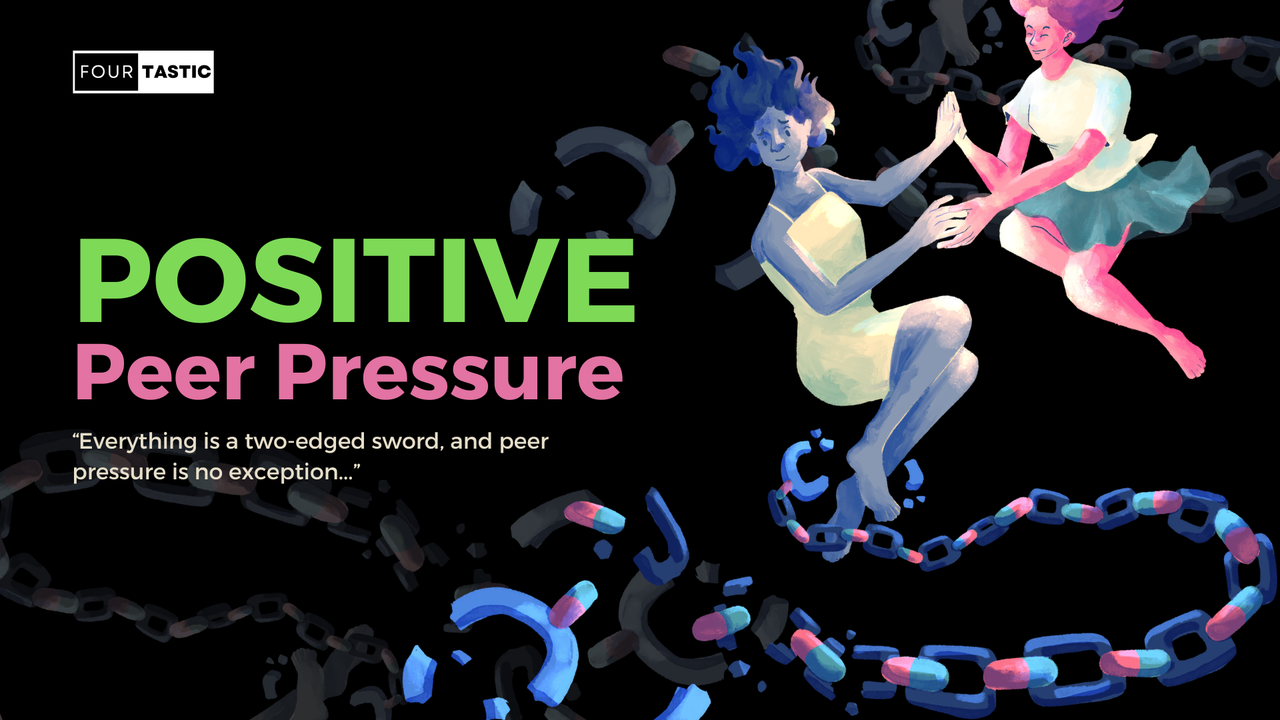
However, everything is a two-edged sword, and peer pressure is no exception. While the aforementioned impacts stem from negative peer pressure, there is another type called positive peer pressure, which can bring various benefits.
.png)
What is positive peer pressure and why does it work?
Positive peer pressure occurs when someone’s peer influences them to engage in positive activities or contribute to their self-development. For instance, peers who do well at school can be a great source of motivation for other students to become more hard-working and goal-oriented; or peers who are kind and often participate in volunteer work also have the ability to influence others to do the same.
Humans are a social species, we yearn for a sense of belonging, and that is why our community has a significant impact on us. Especially, teenagers are more susceptible to their surroundings because they are in a phase of learning about the social place and identity. They have a subconscious tendency to look at what their friends are doing to gather information about how to act and interact with others. Moreover, teenagers are also hypersensitive to the opinions of others and their place in the group. The brain areas linked with reward become more activated, and they can learn more quickly when being observed, interacting, and receiving positive feedback from their peers in a social group. Nonetheless, apart from teenagers, anyone can receive the advantageous influence of this type of pressure.

Some effects of positive peer pressure
In the educational environment
As mentioned above, children and teenagers are under the biggest influence of positive peer pressure. The first impact is educational and self-developmental benefits. Take a group of university friends as an example. They have lots of exercises from the Statistics for Business class, weekly quizzes, and complicated exams. One suggests that they should form a study group when they hang out with each other, and the others also agree. As a result, they all ace the class and get closer to each other after hanging out and helping each other in the process of studying. Not only in studying, but positive peer pressure helps form good characteristics in students. For example, in a group of friends, a student has taken part in a non-profit organization and done some charity work. When talking and sharing about those activities with their friends, the group is interested and decides to join hands with that friend to do volunteer work.
In the workplace
Adults can be greatly affected by positive peer pressure as well. At the workplace, managers can use it to improve leadership. A leader who is capable of influencing their employees to improve their skills and take on challenges is a truly successful one. Furthermore, positive peer pressure can create a community and foster a positive work culture. When this positive influence is embraced, employees are able to collaborate better with their team and make others also feel valued and supported.
Our words
Peer pressure is a common psychological state that all of us, as humans, have to overcome. It might be difficult, but as long as we gain insight into how to deal with and take advantage of the positive side, we will definitely set ourselves up to success later on.
Quỳnh Ngân


