
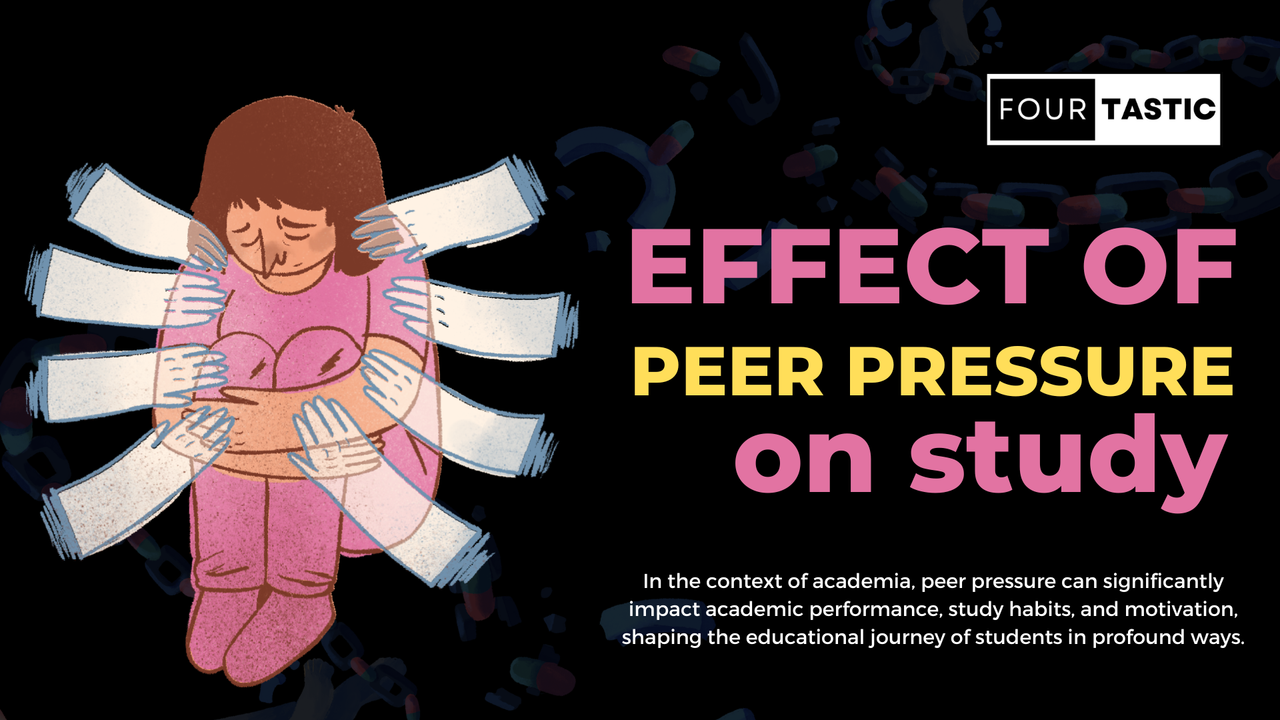
How peer pressure can affect academic performance, study habits, and motivation

Peer pressure is a phenomenon that most of us have encountered at some point in our lives, especially during our formative years in school. While it's often associated with negative behaviors, such as substance abuse or risky activities, its influence extends far beyond these realms. In the context of academia, peer pressure can significantly impact academic performance, study habits, and motivation, shaping the educational journey of students in profound ways.
Academic Performance

Peer pressure can exert a considerable influence on academic performance, both positively and negatively. On one hand, being surrounded by motivated and high-achieving peers can inspire individuals to strive for excellence, fostering a competitive yet supportive environment where students push each other to succeed. However, peer pressure can also lead to academic underachievement if students succumb to negative influences, such as engaging in disruptive behaviors or prioritizing social activities over academic responsibilities.
Studies have shown that students who associate with high-achieving peers tend to perform better academically, as they are motivated to maintain or surpass their peers' standards. Conversely, those who are part of peer groups that prioritize non-academic activities may experience a decline in academic performance due to a lack of focus and dedication to their studies.
Study Habits
Peer pressure can significantly impact study habits, influencing how students approach their academic responsibilities and manage their time. In a positive peer environment, students may adopt effective study habits and time management strategies from their peers, such as setting aside dedicated study periods, seeking help when needed, and staying organized.
Conversely, negative peer pressure can lead to procrastination, distraction, and poor study habits. Students may be influenced by peers who prioritize leisure activities over academic pursuits, leading to a lack of motivation and discipline in their study routines. Additionally, peer pressure can manifest in academic settings through group study sessions, where students may feel compelled to conform to the study habits of their peers, whether they are beneficial or detrimental to academic success.
Motivation
Peer pressure plays a key role in shaping students' motivation levels and attitudes towards learning. Positive peer influences can foster a sense of persuasion and mutual support, encouraging students to set ambitious goals, overcome challenges, and celebrate academic achievements together. Students may feel motivated to excel academically to earn the respect and admiration of their peers, driving them to strive for success.
Conversely, negative peer pressure can undermine students' motivation by instilling feelings of inadequacy, self-doubt, and fear of failure. Students may experience pressure to conform to social norms and expectations, leading to a reluctance to take academic risks or pursue challenging opportunities. Additionally, peer pressure can contribute to a competitive atmosphere where students are more concerned with outperforming their peers than with personal growth and learning.
Peer pressure has a profound impact on academic performance, study habits, and motivation. While positive peer influences can inspire students to achieve their full potential, negative peer pressures can hinder academic success and impede personal growth. Educators, parents, and students alike must be aware of the role of peer pressure in academic settings and work together to cultivate supportive environments that promote positive peer interactions and academic excellence. By fostering a culture of collaboration, encouragement, and resilience, we can empower students to thrive academically and overcome the challenges posed by peer pressure.
Phương Anh


